
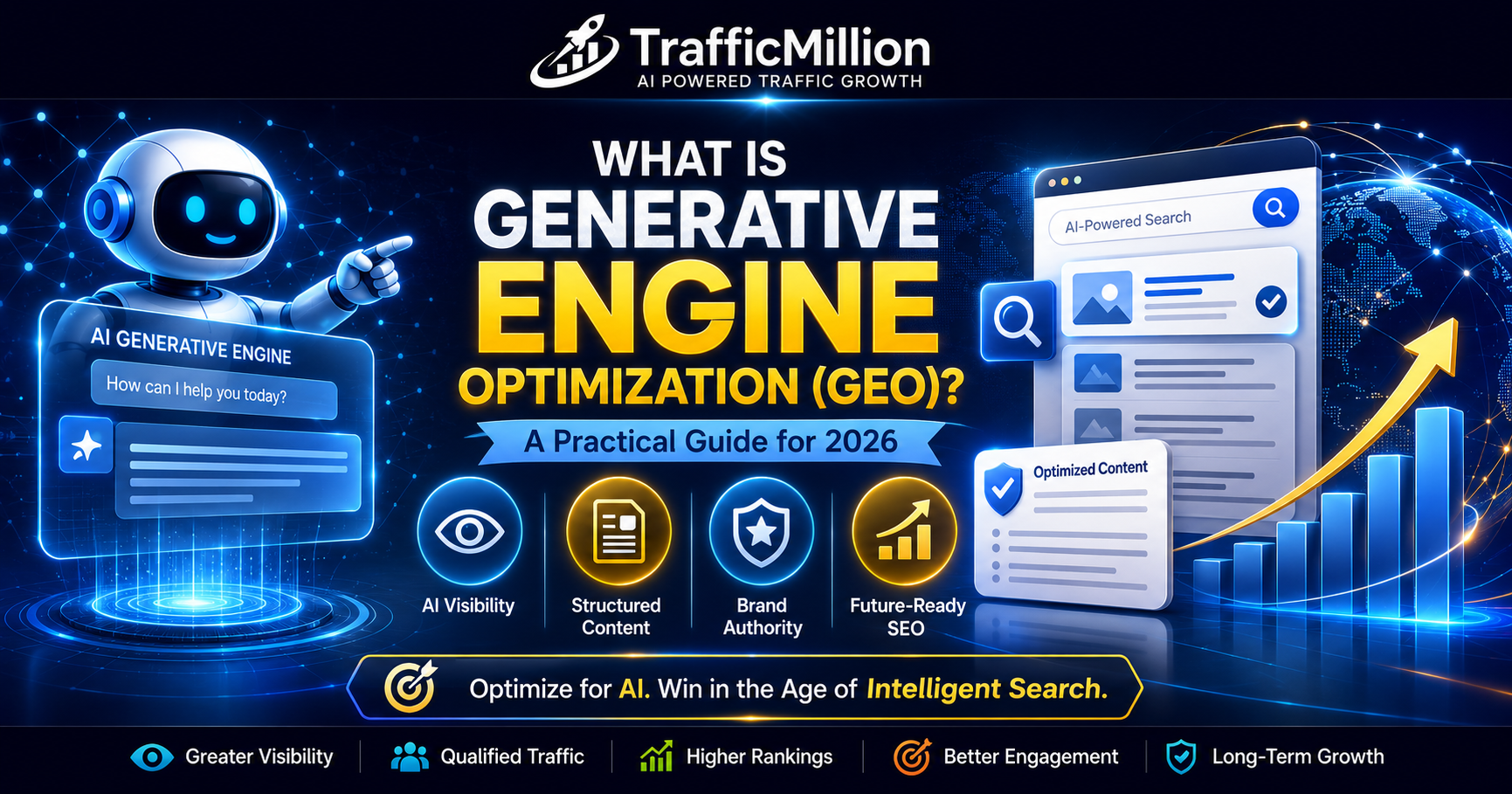
Search is changing. For many years, businesses focused mainly on traditional SEO to rank higher on Google. But in 2026, users are not only searching through Google. They are also asking AI tools like ChatGPT, Gemini, Perplexity, and Copilot for answers, product recommendations, service comparisons, and business suggestions.
This change has created a new digital marketing strategy called Generative Engine Optimization, also known as GEO.
GEO is becoming important for businesses that want to appear in AI-generated answers, AI search results, chatbot recommendations, and future search experiences. If SEO helps your website rank on search engines, GEO helps your brand become visible inside AI-generated responses.
What Is Generative Engine Optimization?
Generative Engine Optimization, or GEO, is the process of optimizing your website, content, brand information, and online authority so AI-powered platforms can understand, trust, and recommend your business.
In simple words, GEO helps your business appear when users ask AI tools questions such as:
- What is the best website traffic service?
- Which company provides GEO optimization?
- How can I increase my website visitors?
- What are the best AI visibility services?
- Which business can help with AI traffic growth?
When AI tools generate answers, they often use information from websites, trusted sources, reviews, brand mentions, structured content, and online authority signals. GEO helps your brand become easier for AI systems to find, understand, and include in those answers.
Why GEO Is Important in 2026
User behavior is changing fast. Many people now prefer asking AI tools direct questions instead of clicking through many search results manually. AI platforms can summarize information, compare services, and suggest businesses within seconds.
This means your business may lose visibility if it only focuses on traditional SEO and ignores AI search.
GEO is important because it helps your business:
- Increase visibility in AI-generated answers
- Improve brand awareness across AI platforms
- Get discovered through ChatGPT, Gemini, Perplexity, and other AI tools
- Build more trust and authority online
- Support long-term website traffic growth
- Improve your chances of being mentioned by AI search engines
In 2026, GEO is not replacing SEO. Instead, it works together with SEO to help your business appear in both traditional search results and AI-powered search experiences.
GEO vs SEO: What Is the Difference?
SEO and GEO are connected, but they are not exactly the same.
Traditional SEO
SEO focuses on improving your website ranking in search engines like Google. The main goal is to appear higher in search results and get more clicks.
GEO Optimization
GEO focuses on improving your visibility in AI-generated answers. The main goal is to make your brand easier for AI tools to understand, mention, cite, and recommend.
Traditional SEO Focuses On:
- Keyword rankings
- Backlinks
- Page speed
- Meta titles and descriptions
- Search engine results pages
- Organic clicks from Google
GEO Focuses On:
- AI visibility
- Clear brand information
- Helpful and structured content
- Authority signals
- FAQ-style answers
- Brand mentions across trusted sources
- Being included in AI-generated recommendations
The best strategy is to use both SEO and GEO together. SEO helps people find your website through search engines. GEO helps people discover your brand through AI-powered answers.
How Generative Engine Optimization Works
AI tools need to understand your business clearly before they can recommend it. If your website content is unclear, thin, outdated, or poorly structured, AI systems may ignore it or recommend competitors instead.
GEO works by improving how AI systems read and understand your brand. This includes your website content, service pages, blog posts, online reviews, business profiles, and trusted brand mentions.
For example, if your business provides website traffic and GEO services, your website should clearly explain:
- What services you provide
- Who your services are for
- How your process works
- What benefits customers can expect
- Why your brand is trustworthy
- How your service is different from competitors
The clearer your content is, the easier it becomes for AI platforms to understand your business.
Key Benefits of GEO Optimization
1. Better AI Visibility
GEO helps your brand become more visible in AI-powered search tools. When users ask AI platforms for recommendations or answers related to your services, your business has a better chance of being mentioned.
2. More Brand Trust
AI tools often prefer clear, reliable, and helpful information. When your website has strong content, reviews, FAQs, and consistent business details, it can build more trust with both users and AI systems.
3. More Website Traffic Opportunities
AI visibility can support website traffic growth. When users discover your brand through AI answers, they may search your business name, visit your website, or click links when available.
4. Stronger Content Authority
GEO encourages businesses to create useful content that answers real customer questions. This can improve your authority in your industry and support both SEO and AI visibility.
5. Future-Proof Marketing Strategy
AI search is growing. Businesses that start GEO early can build visibility before the market becomes more competitive.
How to Optimize Your Website for GEO in 2026
1. Create Clear Service Pages
Your service pages should clearly explain what you offer. Avoid confusing words and short descriptions. AI tools need enough information to understand your business.
A strong service page should include:
- Service name
- Simple explanation
- Main benefits
- Who the service is for
- How the process works
- Frequently asked questions
- Clear call-to-action
2. Add Helpful FAQ Sections
FAQ sections are very useful for GEO because users ask AI tools questions in a natural way.
For example:
- What is GEO optimization?
- How does AI traffic work?
- Can GEO help my business appear in ChatGPT?
- Is GEO different from SEO?
- How long does AI visibility take?
Answer these questions clearly on your website. This makes your content easier for AI systems and users to understand.
3. Use Structured Content
AI systems often understand content better when it is well organized. Use headings, short paragraphs, bullet points, comparison sections, and step-by-step explanations.
Avoid writing long blocks of text without structure. Clear formatting helps both readers and AI tools.
4. Build Brand Mentions
Your brand should appear across trusted online sources. This may include business directories, social media profiles, review platforms, guest posts, press releases, and industry websites.
Consistent brand mentions help AI tools understand that your business exists and is connected to your services.
5. Improve Online Reviews and Trust Signals
Reviews are important for trust. If people are talking positively about your business, AI systems may better understand your brand reputation.
Useful trust signals include:
- Customer reviews
- Trustpilot profile
- Google Business Profile
- Social media pages
- Clear contact information
- About page
- Privacy policy and terms pages
6. Publish GEO-Friendly Blog Posts
Blog posts are powerful for GEO because they answer questions users may ask AI tools.
Good GEO blog topics include:
- What is AI traffic?
- What is Generative Engine Optimization?
- AI Traffic vs Traditional Web Traffic
- How to improve ChatGPT visibility
- How AI search is changing SEO
- Best ways to increase website traffic in 2026
Each blog post should answer the topic clearly and include helpful examples.
7. Keep Your Brand Information Consistent
Your business name, website URL, service descriptions, social links, and contact details should be consistent across the web.
If your information is different on different platforms, it can confuse users and AI systems.
GEO Content Checklist for 2026
Before publishing content, check if your page includes:
- A clear title
- A simple explanation of the topic
- Helpful headings
- Short paragraphs
- Bullet points
- FAQ-style answers
- Real business information
- Internal links to related pages
- Clear call-to-action
- Trust signals
This type of structure helps your content perform better for both traditional SEO and GEO.
Common GEO Mistakes to Avoid
- Publishing thin content with very little useful information
- Using unclear service descriptions
- Ignoring FAQ sections
- Not building reviews or trust signals
- Copying competitor content
- Using too much keyword stuffing
- Not updating old content
- Ignoring brand consistency across the web
GEO is not about tricking AI tools. It is about making your brand clear, helpful, trustworthy, and easy to understand.
Is GEO the Future of SEO?
GEO is not replacing SEO completely, but it is becoming an important part of modern search marketing.
People still use Google, Bing, social media, and traditional websites. But AI tools are now becoming part of the customer journey. Users may ask AI for advice before they visit a website, compare products, or contact a business.
That is why businesses should not depend only on old SEO methods. The future of online growth will include both traditional SEO and GEO.
Final Thoughts
Generative Engine Optimization is one of the most important digital marketing strategies for 2026. As AI search continues to grow, businesses need to make sure their websites, content, and brand information are ready for AI-powered discovery.
GEO helps your business improve AI visibility, build trust, attract more visitors, and prepare for the future of search.
If your business wants to grow online, now is the right time to focus on SEO, website traffic, and Generative Engine Optimization together.
🚀 Start Growing with GEO Optimization Today
If you want your business to get more website visitors, improve AI visibility, and appear across modern search platforms, TrafficMillion can help you move forward with AI-powered traffic growth and GEO optimization services.
Start Your AI Web Traffic Campaign Today